About Arogyadhama
A 40-year journey of healing, research, and scientific validation of India's ancient wellness traditions.
Four Decades of Purpose
Arogyadhama's story is inseparable from the visionary journey of S-VYASA — Swami Vivekananda Yoga Anusandhana Samsthana. What began in 1981 as a humble yoga therapy research unit called VK YOCTAS has grown into India's most respected integrative medicine institution.
In 1986, the organisation expanded its scope and was renamed VKYOGAS, deepening its research into the therapeutic applications of Yoga. By 2000, under the name VYASA, it had become synonymous with rigorous, peer-reviewed Yoga science in India.
The pivotal moment came in 2002, when the University Grants Commission (UGC) conferred the status — making S-VYASA, Bengaluru the world's first and only university dedicated entirely to Yoga science and integrative medicine. Arogyadhama, its hospital arm, became the clinical laboratory where research met real healing.
VK YOCTAS Founded
Renamed VKYOGAS
Renamed VYASA
S-VYASA, Bengaluru
Arogyadhama was born from the confluence of two extraordinary minds — a scientist-sage and a physician-healer — united by a shared conviction that ancient India's healing wisdom deserved rigorous scientific validation. Their partnership has produced an institution unlike any other in the world.
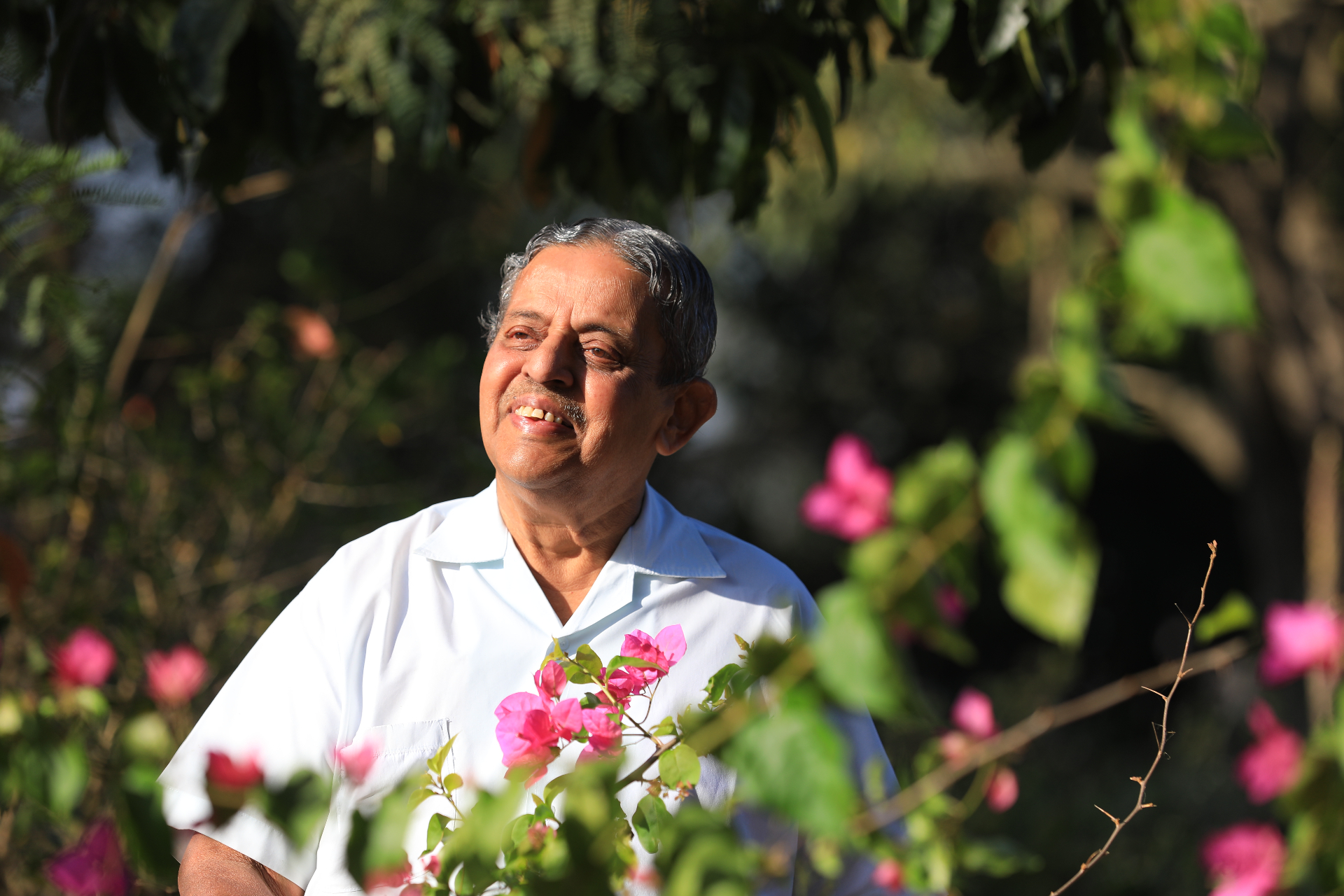
Dr. H. R. Nagendra
B.E., M.Tech (IIT), PhD
President
S-VYASA, Bengaluru
Yoga is not a religion. It is a science — a science of well-being, of youthfulness, of integrating body, mind, and soul. The ancient sages were our first scientists.
Dr. H. R. Nagendra is the founding father of Arogyadhama and the architect of S-VYASA University. An aerospace engineer by training — with degrees from IIT Bombay — Dr. Nagendra's encounter with Swami Vivekananda's teachings redirected his extraordinary intellect from machines to the human body and mind.
In 1981, he co-founded the organisation that would become S-VYASA, with a singular conviction: that Yoga could be subjected to scientific scrutiny and, validated thus, could heal conditions that conventional medicine struggled with. Forty years later, that conviction has produced over 1,000 peer-reviewed papers.
Dr. Nagendra's role in the establishment of International Yoga Day was seminal. When Prime Minister Modi proposed the concept to the UN in 2014, it was Dr. Nagendra's team at S-VYASA that designed the evidence-based yoga protocols adopted globally. In 2016, the Government of India recognised his life's work with the Padma Shri.
Today, as President of S-VYASA, Dr. Nagendra continues to lead with the rare combination of scientific rigor and spiritual depth that defines Arogyadhama.
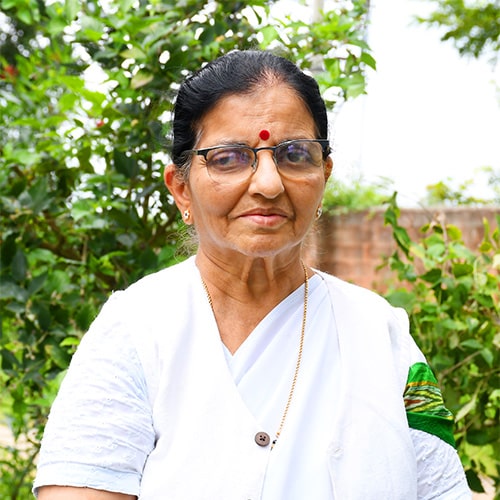
Dr. R. Nagarathna
MBBS, MD, FRCP (London, UK)
Medical Director
Arogyadhama, S-VYASA
When a patient arrives with diabetes and leaves having transformed their lifestyle, their stress response, their relationship with their body — that is not just medicine. That is true healing.
Dr. R. Nagarathna is the clinical heart of Arogyadhama. As Medical Director, she has, for over four decades, translated the institution's research excellence into real-world healing for tens of thousands of patients. Her qualifications span both worlds: an MBBS and MD from conventional medicine, and a Fellowship from the Royal College of Physicians in London — among the most prestigious medical credentials in the world.
Dr. Nagarathna co-founded the institution alongside Dr. Nagendra in 1981, but where he provided the scientific framework, she provided the clinical vision. Her specialisation in integrative approaches to Non-Communicable Diseases — particularly diabetes, hypertension, and respiratory disorders — has produced some of Arogyadhama's most cited research.
Her landmark work demonstrating Yoga's measurable effects on blood glucose in Type 2 diabetes — published in peer-reviewed journals — has been cited worldwide and influenced clinical guidelines. She is one of the few clinicians globally to have conducted large-scale, randomised controlled trials on Yoga therapy.
In 2019, the Government of Karnataka honoured her with the Kannada Rajyotsava Award for distinguished contributions to medicine. Under her clinical leadership, Arogyadhama's treatment protocols have maintained an exceptional safety record while pioneering a new paradigm of evidence-based integrative care.
Not Alternative. Integrative.
At Arogyadhama, we don't choose between ancient wisdom and modern science — we unite them. Every patient receives a personalised protocol combining multiple healing modalities, all grounded in peer-reviewed research and guided by experienced physicians.
Integrative
Medicine
Yoga Therapy
Scientific application of asana, pranayama, meditation for disease management
Ayurveda
Personalized herbal formulations, Panchakarma detox, dietary guidelines
Naturopathy
Mud therapy, hydrotherapy, fasting, sunlight therapy, water treatments
Acupuncture
Traditional Chinese meridian therapy for pain and systemic healing
Physiotherapy
Movement science and rehabilitation for mobility restoration
Psychotherapy
Mind-body counseling, cognitive behavioral tools, and group therapy
Diet & Nutrition
Therapeutic sattvic diet plans designed around individual conditions
Modern Diagnostics
Full lab, ECG, echo, pulmonary function tests — all under one roof
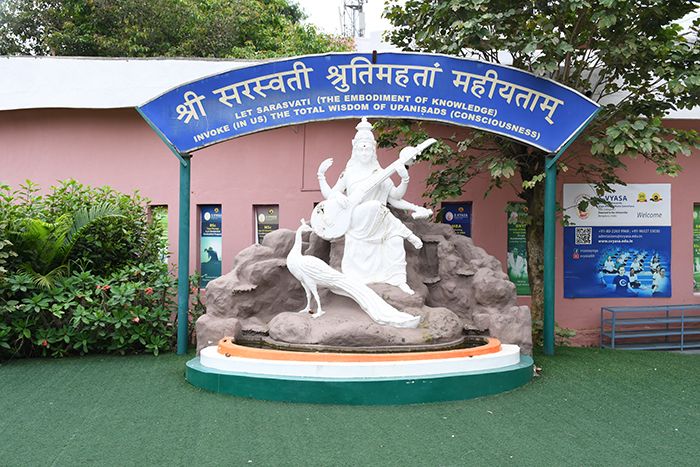
Prashanti Kutiram —
Where Healing Begins
Prashanti Kutiram — the "Abode of Supreme Peace" — is not merely a campus. It is an experience. Located on the outskirts of Bengaluru, tucked against the serene Bannerghatta hills, about 35 kilometres from the city centre, this rural sanctuary was chosen with deep intentionality.
The healing environment itself is therapeutic. Fresh air, birdsong, open skies, and the proximity of a biodiverse forest create the conditions that Ayurveda and Naturopathy have long prescribed: reconnection with nature as medicine.
Within this 100-acre campus, our 600-bed hospital, yoga halls, meditation gardens, Ayurvedic pharmacy, research laboratories, and residences for faculty and students coexist in harmony. The architectural philosophy reflects the integration we practice — traditional Indian design principles merged with functional modern infrastructure.