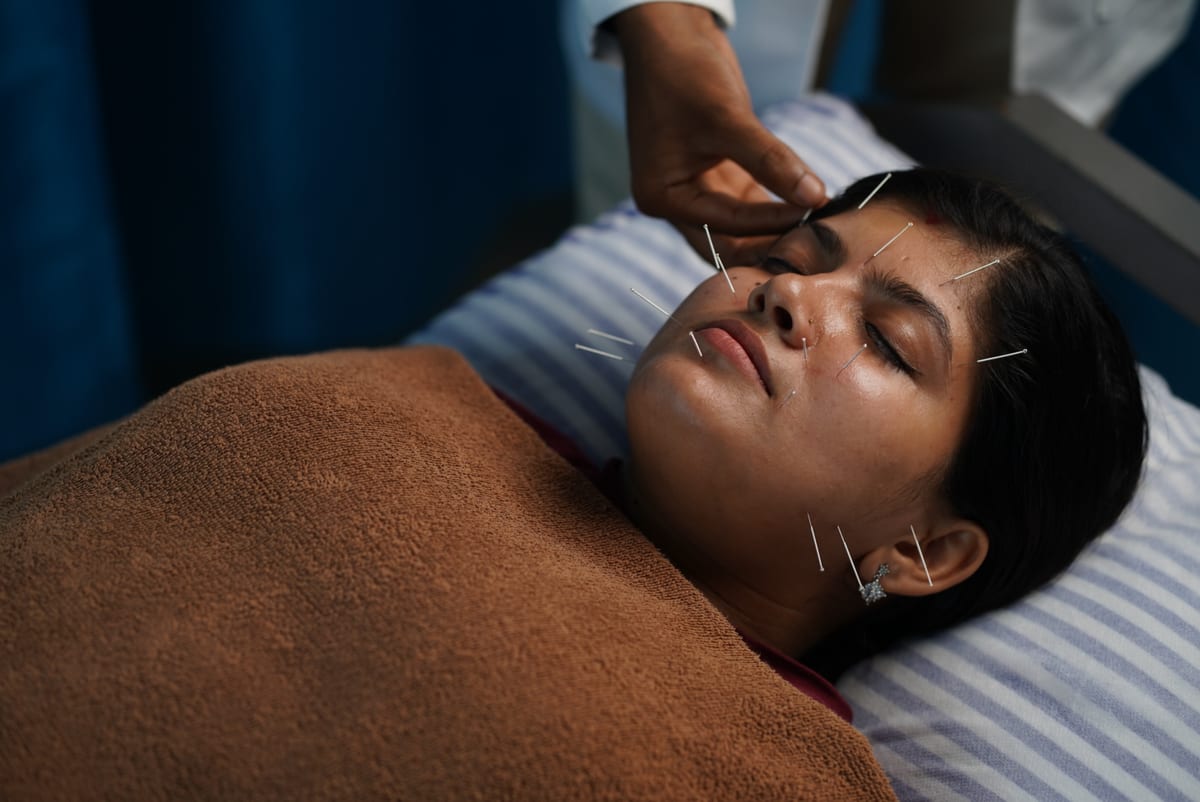
Acupuncture
Ancient Chinese medicine meets modern neuroscience — precise energy point therapy for pain relief, neurological healing, and systemic wellness restoration.
The Art of Energy Medicine
Acupuncture works on the body's energy highways — 12 primary meridians that carry Qi (life force) through every organ and tissue. When this flow is disrupted, disease follows.
Traditional Chinese Medicine posits that the body contains a network of invisible channels — meridians — through which vital energy (Qi) flows. Acupuncture needles, placed at specific points along these meridians, regulate the flow of Qi, removing blockages and restoring balance.
At Arogyadhama, our trained acupuncturists integrate this ancient framework with modern neurophysiological understanding. We know that acupuncture points correspond to areas of high electrical conductivity and rich nerve density — stimulating them releases endorphins, modulates pain signals, and triggers anti-inflammatory responses.
Key Meridian Pathways
Lung Meridian
Lungs, skin, large intestine
Asthma, skin disorders, grief
Heart Meridian
Heart, small intestine, tongue
Anxiety, palpitations, insomnia
Kidney Meridian
Kidneys, bladder, bones
Lower back pain, fear, fatigue
Liver Meridian
Liver, gallbladder, eyes
Anger, headaches, vision problems
Stomach Meridian
Stomach, spleen, pancreas
Digestive disorders, worry, obsession
Large Intestine
Colon, lungs, skin
Constipation, grief, skin issues
The Acupuncture Toolkit
Our acupuncturists hold formal qualifications in Traditional Chinese Medicine and are trained in multiple specialised protocols.
Classical Acupuncture
Stainless steel fine needles inserted at precise meridian points. Disposable, sterile, virtually painless. The gold standard for most conditions.
Auricular Acupuncture
The ear contains a microsystem reflecting the entire body. Ear points are used for addiction, weight management, anxiety, and chronic pain.
Electro-Acupuncture
Mild electrical stimulation through needles amplifies the therapeutic effect — particularly useful for chronic pain, paralysis, and neurological conditions.
Moxibustion
Burning of the herb Mugwort near acupuncture points to warm and invigorate Qi flow — used for cold conditions, deficiency, and immune support.
Acupressure
Thumb and finger pressure on acupuncture points — no needles required. Taught to patients for self-management between sessions.
Cupping Therapy
Suction cups placed on the skin to improve circulation, relieve muscle tension, and enhance the flow of Qi through superficial meridians.
What Acupuncture Heals
Acupuncture's evidence base is strongest for pain management and neurological support — though its scope extends across many body systems.
WHO-Endorsed Conditions
The World Health Organization (WHO) endorses acupuncture for over 40 conditions, including chronic pain, neurological disorders, musculoskeletal conditions, and certain mental health conditions. Arogyadhama's acupuncture protocols align with WHO evidence-based guidelines.
The Science Behind the Needles
Modern research has begun to decode Acupuncture's mechanisms — validating what Traditional Chinese Medicine has practiced for millennia.
Endorphin Release
Multiple studies using PET scans show acupuncture stimulates the release of endogenous opioids — the body's natural pain killers — in the brain. This explains its efficacy for chronic pain conditions.
Anti-Inflammatory Effects
Acupuncture activates cholinergic anti-inflammatory pathways, reducing systemic inflammation. Studies demonstrate significant reduction in inflammatory markers like CRP and TNF-α.
Autonomic Nervous System Modulation
Electroacupuncture at specific points shifts the autonomic balance from sympathetic (fight-or-flight) to parasympathetic (rest-and-digest), benefiting anxiety, IBS, and hypertension.
Neuroplasticity
fMRI studies show acupuncture produces specific, reproducible changes in brain activity — particularly in limbic regions involved in pain, emotion, and cognition — distinct from placebo effects.
Related Therapies
Ready to Begin Your Healing?
Speak with our integrative medicine specialists and receive a personalised treatment protocol designed for your specific condition and goals.