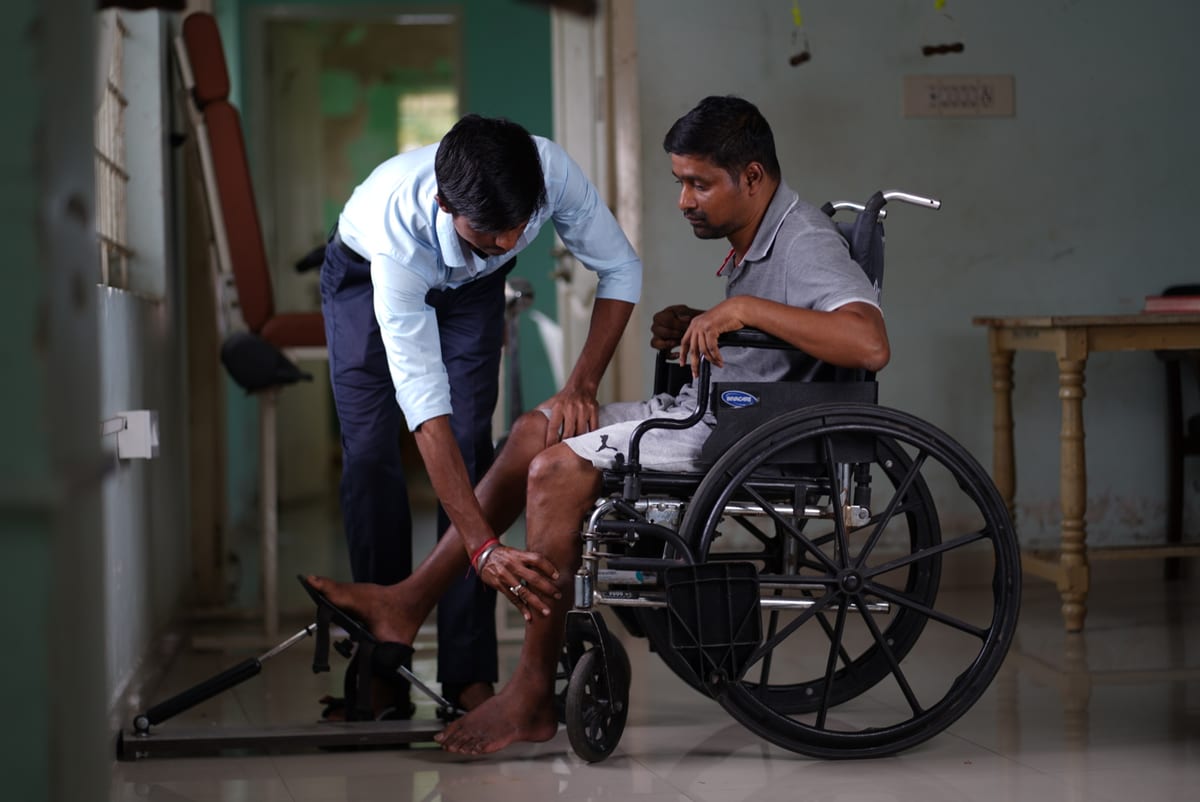
Physiotherapy
Evidence-based movement medicine for rehabilitation, mobility restoration, and post-surgical recovery — integrated with Yoga therapy for complete physical healing.
The Science of Rehabilitation
Physiotherapy at Arogyadhama goes beyond conventional rehab — it's integrated with Yoga, Ayurveda, and naturopathic principles for comprehensive physical restoration.
The human body is designed to move. When movement is disrupted — by injury, surgery, neurological damage, or chronic disease — the physiotherapy department at Arogyadhama creates the pathway back to functional freedom.
Our physiotherapists hold advanced qualifications and work as part of the integrated clinical team, collaborating with Yoga therapists and Ayurvedic physicians to design protocols that address not just biomechanical restoration, but the complete physical wellbeing of the patient.
Movement Analysis
Detailed gait and posture assessment forms the foundation of every physiotherapy protocol at Arogyadhama.
Electrotherapy
TENS, ultrasound, IFT, and other electrophysical agents for pain management and tissue healing.
Manual Therapy
Hands-on techniques including joint mobilisation, manipulation, and soft tissue release.
"Physiotherapy at Arogyadhama is not about pain management alone — it's about restoring the patient's confidence in their own body. When movement returns, hope returns."
Rehabilitation Methods
Our physiotherapy department is equipped with modern technology while maintaining the integrative philosophy that defines Arogyadhama.
Exercise Therapy
Therapeutic Exercise
Structured, graded exercise programmes to restore strength, endurance, and functional capacity after injury or illness.
Neurological Rehabilitation
Specialised exercises for stroke, Parkinson's, and other neurological conditions — using neuroplasticity principles.
Balance & Proprioception Training
Rebuilding the body's sense of position and balance, particularly important for elderly patients and post-stroke rehabilitation.
Breathing Exercises
Diaphragmatic and pursed-lip breathing coordinated with movement — essential for pulmonary and cardiac rehabilitation.
Electrotherapy
TENS (Transcutaneous Electrical Nerve Stimulation)
Pain-blocking electrical current for chronic musculoskeletal pain, neuropathy, and post-surgical pain.
Ultrasound Therapy
High-frequency sound waves for deep tissue healing, calcific deposits, and joint conditions.
Interferential Therapy (IFT)
Medium-frequency electrical current that penetrates deeper than TENS — for deep muscular pain and circulatory stimulation.
Shortwave Diathermy
Deep heating treatment for chronic joint conditions, sinusitis, and sub-acute musculoskeletal disorders.
Manual & Other Therapy
Joint Mobilisation
Graded oscillatory movements applied to joints to restore range of motion, reduce pain, and improve joint nutrition.
Soft Tissue Mobilisation
Techniques including myofascial release, trigger point therapy, and deep friction massage for muscle and fascia conditions.
Taping (Kinesio & Rigid)
Supportive taping for acute injuries, postural correction, and support during activity — widely used in sports rehabilitation.
Hydrotherapy (Physio)
Pool-based exercises that use water's buoyancy to allow pain-free movement — particularly valuable for arthritis and obesity.
Restoring Functional Freedom
From post-stroke paralysis to post-surgical recovery, our physiotherapy department addresses a wide spectrum of musculoskeletal and neurological conditions.
Physiotherapy + Yoga: Stronger Together
At Arogyadhama, physiotherapy and Yoga therapy are practiced as complementary sciences — each enhancing the other's effectiveness.
Yoga Enhances Proprioception
Yoga asanas develop body awareness and proprioceptive sensitivity that complements physiotherapy balance training — patients who practice both show faster recovery of coordination after neurological injury.
Physiotherapy Builds the Foundation for Yoga
For patients with structural limitations, physiotherapy first restores joint mobility and muscular balance — creating the physical prerequisites for safe, therapeutic Yoga practice.
Pranayama Supports Physical Rehabilitation
Breathing exercises from Yoga directly improve exercise tolerance and respiratory efficiency — critical for cardiac and pulmonary rehabilitation patients.
Shared Goal: Functional Independence
Both Yoga therapy and physiotherapy ultimately aim to restore the patient's capacity for independent, pain-free movement — making their combination more powerful than either alone.
Related Therapies
Ready to Begin Your Healing?
Speak with our integrative medicine specialists and receive a personalised treatment protocol designed for your specific condition and goals.